1 of 3Spend by month
$661,448A
Spent since 9/4, about $10,000 a day
September $195,766. October $360,899. November through 11/11 $104,784. It runs on two campaigns.

HallPass on Meta · the plan
Good Peeps for HallPass · Meta plan · Draft 4
The money is already on Meta, $661,448 since 9/4A, and this plan makes it prove itself at Walmart.
Scroll, or press P to present
BriefSix points we are planning around
8 moving to 20 to 25
Units per store per day at Walmart: where it stands, and the North StarG
AuditRead in the account 11/11, refreshed 11/12
Meta is a $300K-a-month channel that buys email sign-ups. Nothing in the account can see a Walmart sale.
| What we found | The number |
|---|---|
| Spend since launch, 9/4 to 11/11 | $661,448 |
| September | $195,766 |
| October | $360,899 |
| November 1 to 11 | $104,784 |
| What every sales ad set optimizes to | Complete Registration on a 7-day click. We read it as the email sign-up, and Events Manager confirms what sends it |
| What that bought | 52,868 sign-ups at $12.51 each, $4.49 in November |
| Site purchases from all of it | 43 ($2,396) |
| Where every ad sends people | The $49.99 carton page, under a “Shop HallPass Candy at Walmart” headline |
| Who the cheap sign-ups are | People 55 and over took 48.5% of spend and 63% of sign-ups since 10/6 |
| Events for “find in store” or a click to Walmart | None |
| Reach buying in September | 42.4M impressions for $162,245, a $3.83 CPM |
| How many would remember that flight | 335,600 of 11.8M reached, 2.84%, by Meta's own estimate |
| Sign-up buying since | $17.85 CPM in November, $23.56 in October |
| How people watch 30 to 66 second videos | 43.9% pass three seconds, 22.3% reach a quarter, 4.5% finish |
| Geo pushes already paid for | North Carolina $133,409, Texas $274,245, never read against store sales |
| What the Texas and North Carolina pushes delivered | Texas: 3.28M people reached 3.92 times. North Carolina: 783,930 people, 5.86 times |
| Frequency by month | September 3.59, October 3.99, November 2.52 |
Results are Meta's own counts on each ad set's setting, which is 7-day click on every sales ad set.
1 of 3Spend by month
$661,448A
September $195,766. October $360,899. November through 11/11 $104,784. It runs on two campaigns.
2 of 3What it bought
52,868A sign-ups
Every sales ad set optimizes to Complete Registration, the email pop-up. Sign-ups cost $12.51 each and $4.49 in November. People 55 and over took 48.5% of spend and 63% of sign-ups since 10/6.
3 of 3The price of attention
$3.83A CPM
The September flight bought 42.4M impressions for $162,245. It was cheap and barely remembered: Meta's own estimate is that 335,600 of the 11.8M people reached would recall the ad, 2.84%.
AuditThe landing path
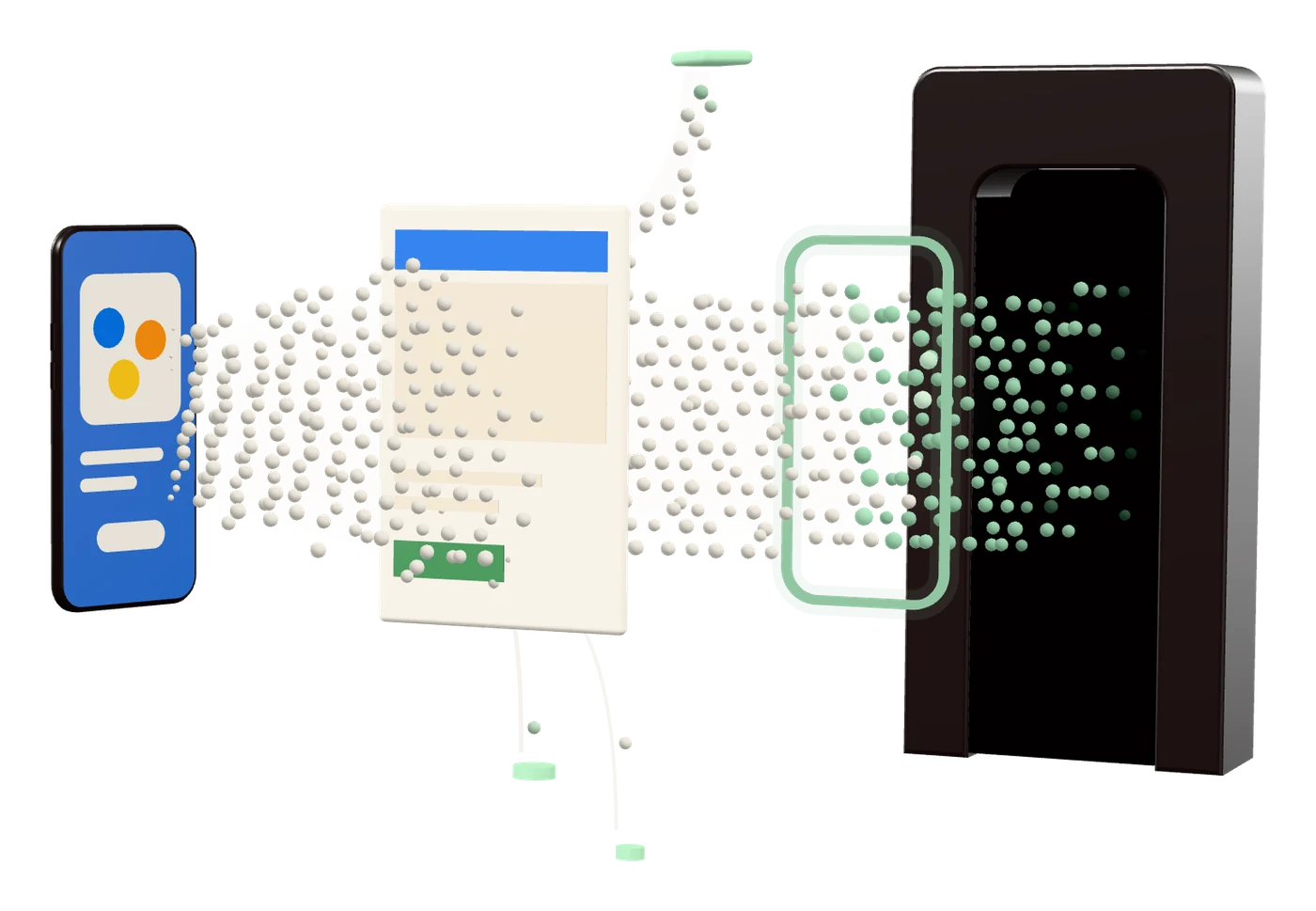
All live ads carry the headline “Shop HallPass Candy at Walmart” and link to the $49.99 carton page.
| Step | Count |
|---|---|
| Landing page views | 470,347 |
| Email sign-ups | 52,868 |
| Add-to-carts | 3,351 |
| Checkouts | 251 |
| Purchases | 43 ($2,396) |
| Events for “find in store” or a click to Walmart | None |
The carton page sells 20 packs for $49.99, about $2.50 a pack against about $1.82 at WalmartG.
1 of 5People arrive
470,347A
The person who wants it at Walmart meets a carton of 20 packs for $49.99.
2 of 5The pop-up
52,868A sign-ups
It is the event every sales ad set optimizes to, so Meta finds the cheapest people who fill in a form.
3 of 5The store on the site
43A purchases
The carton works out at about $2.50 a pack against about $1.82 at WalmartG.
4 of 5The store that matters
None
Whatever a shopper does next at Walmart is invisible to the account.
5 of 5What changes
The fix
The site already runs the Pear Commerce store locator, which shows the Walmarts near a shopper and what each one carries. We send both actions to Meta and optimize to them.
AuditGeo pushes, 9/4 to 11/11
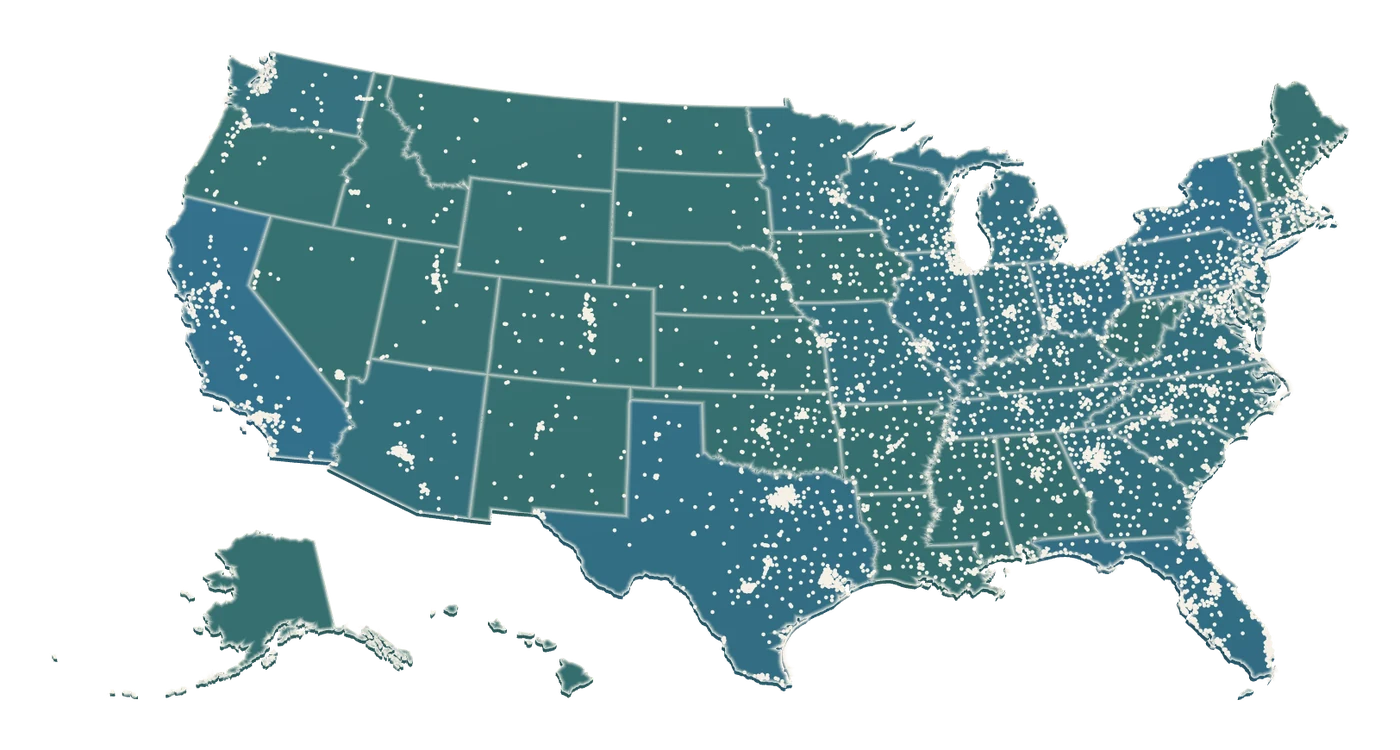
ZIP tiers, ZIP lists, whole states, all of Texas for a month, then the whole country. Nobody has compared any of it with Walmart store sales.
| Dates | What ran | Spend | What it got |
|---|---|---|---|
| 9/4 to 9/24 | Awareness: reach buying on ZIP lists. REACH (21,905 ZIPs, one week), then ACCELERATE (7,693), SUSTAIN (916) and PI (2,714) | $162,245 | 42.4M impressions at a $3.83 CPM; 11.8M people reached 3.59 times; Meta estimates 335,600 would recall the ad (2.84%) |
| 9/23 to 10/21 | North Carolina sales campaigns on 130 ZIPs | $133,409 | 5,918 sign-ups, 3 purchases; 783,930 people reached 5.86 times |
| 10/6 to 11/2 | Two Texas sales campaigns at $7,000 and $3,000 a day | $274,245 | 29,226 sign-ups in the window at $11.65; 3,277,412 people reached 3.92 times |
| 10/21, eight hours | Florida (164 ZIPs) and Alabama, Georgia and Louisiana (whole states) | $8,508 | Paused the same evening |
| 11/3 onward | The Texas campaigns renamed “USA” and opened to the whole country. Texas spend fell from about $70,000 a week to $1,374 in the week of 11/7 | $83,004 to 11/11 | 20,692 sign-ups at $4.01; 2,067,905 people reached 2.38 times through 11/12 |
| State | 9/1 to 10/5 | 10/6 to 11/2 | 11/3 to 11/11 |
|---|---|---|---|
| North Carolina | $81,008 | $57,526 | $1,356 |
| Texas | $18,335 | $274,245 | $4,462 |
| California | $27,387 | $7,516 | |
| New York | $13,304 | $7,194 | |
| Florida | $10,824 | $3,488 | $5,480 |
| Arizona | $8,424 | $1,605 | |
| Illinois | $6,225 | $3,485 | |
| Ohio | $5,495 | $3,849 | |
| Pennsylvania | $5,066 | ||
| Indiana | $4,553 | $2,039 | |
| Michigan | $4,505 | $3,333 | |
| New Jersey | $4,473 | $3,526 | |
| Nevada | $4,033 | ||
| Georgia | $3,955 | $2,854 | $1,924 |
| Massachusetts | $3,877 | $2,525 | |
| Tennessee | $3,442 | $1,634 | |
| Colorado | $2,806 | ||
| Oregon | $2,771 | ||
| South Carolina | $2,299 | $1,279 | |
| Louisiana | $2,287 | $990 | |
| Missouri | $2,199 | $1,787 | |
| Alabama | $2,137 | $1,185 | |
| Virginia | $2,052 | ||
| Oklahoma | $1,956 | ||
| Connecticut | $1,864 | $1,330 | |
| Kansas | $1,743 | ||
| Washington | $1,703 | $1,523 | |
| Kentucky | $1,599 | $1,277 | |
| Nebraska | $1,545 | ||
| Wisconsin | $1,503 | $1,898 | |
| Maryland | $1,487 | ||
| Minnesota | $1,309 |
An empty cell is a state under $1,500 in the first period, under $300 in the second or under $1,000 in the third.
1 of 6The shelf
4,615R
The points on the map are store locations from public map data. Each geo push was a choice about which of them to reach.
2 of 69/4 to 9/24
$162,245A
21,905 ZIPs the first week, then 7,693, 916 and 2,714, named after HallPass's own store priority cohortsG. Meta's own estimate is that 335,600 of the 11.8M people reached would recall the ad, 2.84%.
3 of 69/23 to 10/21
$133,409A
783,930 people reached 5.86 times. 5,918 sign-ups and 3 purchases. No Walmart display test is on record for the state.
4 of 610/6 to 11/2
$274,245A
3,277,412 people reached 3.92 times, on 80.6% of the window's spend. 29,226 sign-ups at $11.65. A Walmart display test ran in the same monthG.
5 of 610/21
$8,508A in eight hours
Florida on 164 ZIPs, with Alabama, Georgia and Louisiana as whole states. Paused the same evening.
6 of 611/3 onward
$83,004A to 11/11
The Texas campaigns were renamed “USA” and opened nationally: 20,692 sign-ups at $4.01. Texas spend fell from about $70,000 a week to $1,374, an off-switch the first test can read.
$3.83A CPM
About half of what Walmart's own on-site awareness formats cost in October, $7 to $8G.
2.91%A
Link click-through went from 0.13% in September to 2.91% in November. A landing page view cost $0.62 in November.
$4 to $5A
They earned sign-ups at $4 to $5 in the national set before they were paused on 11/11.
19 of 39A
19 of the 39 purchases since 10/6 came from people 25 to 34.
43.9%A
That share of video impressions passes three seconds, and 38.8% of those reach a ThruPlay.
One pixelA
Advanced matching on, the Conversions API live, UTMs on every ad, GA4 and Klaviyo in place, and Pear on the site.
52,868A
Sign-ups that can be mailed the locator and an offer, and matched to stores by ZIP.
ProofEight tests
The first test reads two pushes HallPass already paid for and costs nothing. The second is the proof, read on Walmart units per store per week.
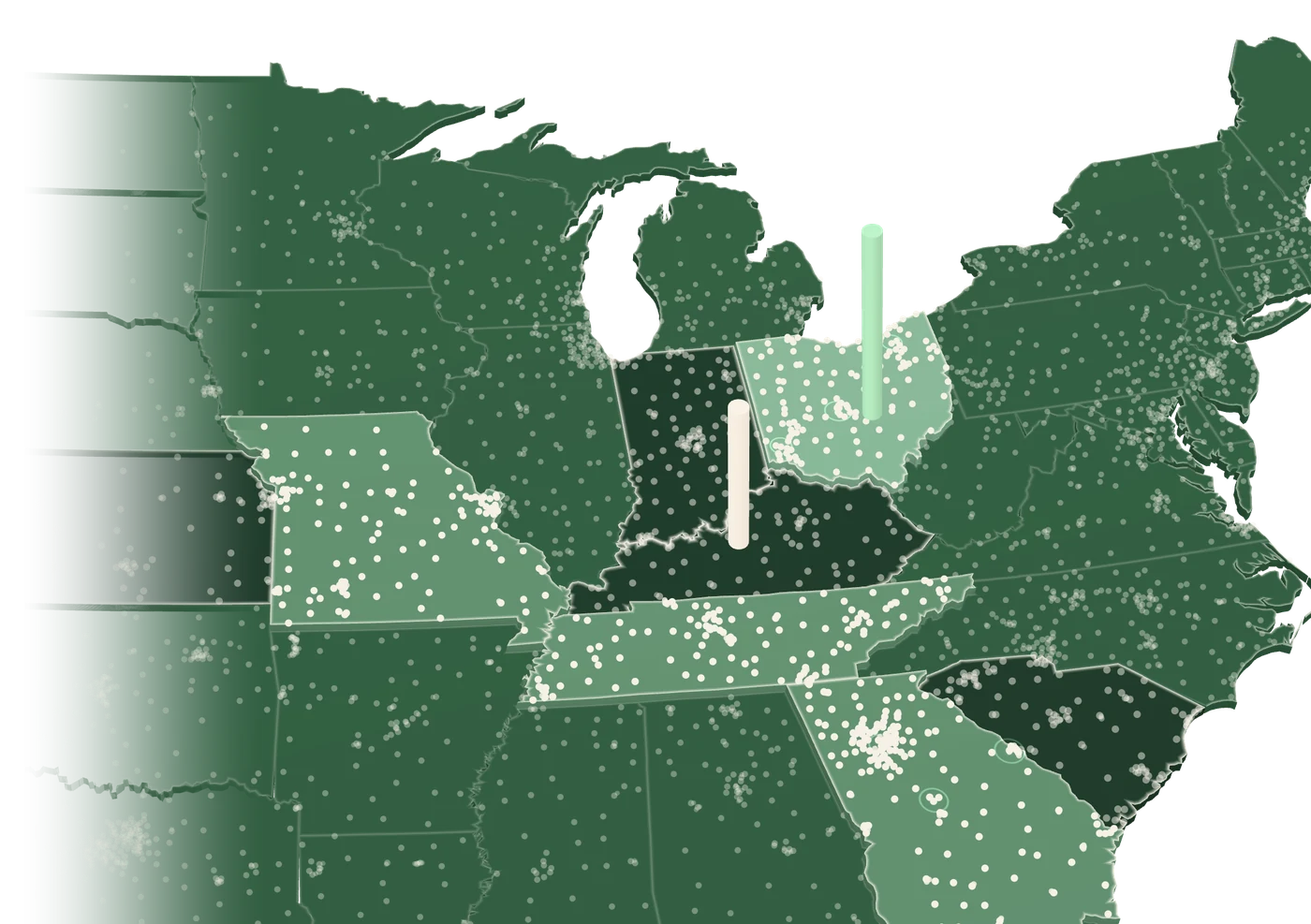
Markets shown are an example. The real assignment is drawn at random after the power check on store data.
| Test | Question | Design | Read on | When |
|---|---|---|---|---|
| T1 | Did the North Carolina and Texas pushes move Walmart units? | Past data only. Stores in the North Carolina ZIP lists and in Texas against matched stores in states Meta barely touched, before and during. | Store-week units | Now, once store data arrives |
| T2 | What does Meta add at the shelf? | Randomized test and hold-out markets, nothing else changed between them. | Store-week units, test against control | 12/26 to 2/19, readout week of 3/8 |
| T3 | Which event finds store buyers? | Sign-ups against the store-intent event, split by market. | Units per dollar in each cell | Inside T2, once Pear events are live |
| T4 | Which landing path? | Carton page, locator page, Aisle offer page. | Store-intent events, then units | Inside T2 |
| T5 | Do low-selling stores respond more? | Extra weight on low-velocity store ZIPs against matched low-velocity controls. | Velocity change by store tier | Third arm of T2 if cells allow, otherwise from 3/8 |
| T6 | Which January message? | New-year and diet-soda angles as separate ads in the same cells. | Hook and hold rate, then units | January |
| T7 | Does the money work harder without Facebook? | Instagram only against all placements, same ads and same ages, as a split test so the two never bid for the same person. | Age mix, cost per thousand, cost per landing page view and per store-intent event | Two weeks in December, outside the January markets |
| T8 | Which channel moves a store: Instacart, Meta or neither? | Three matched groups of store clusters outside the T2 markets: Instacart only, Meta only, no media. The same Aisle offer in all three. | Aisle redemptions by cell, then store-week units | Four to six weeks, placed around the December retail hold-out weeks |
What T1 has to work with: North Carolina got about $133,000 in four weeks on 130 ZIPs, reaching 783,930 people 5.86 times. Texas got about $70,000 a week for three full weeks, reaching 3.28 million people 3.92 times, and then fell to $1,374 a week when the campaigns went national on 11/3A. So both states have an on-switch and Texas has an off-switch.
What T1 can and cannot say: North Carolina had 24 days of sales history before its push and Texas had 37, both during the launch build, and Texas also had a Walmart display testAGR. T1 is directional. It tells us whether a heavy Meta month left a visible mark, which shapes how we size January. T2 is the proof.
T7 has a head start. Since 10/6 the same 19 videos have run in an Instagram-only campaign for ages 18 to 34 and an all-placements campaign for ages 18 to 65: 21 site purchases each, on $111,958 and $260,040A. They differ in age as well as platform, which is why T7 is a split test. A redemption in T8 counts people who would have bought anyway, so store units are the second read.
1 of 3T2, the proof
12/26 to 2/19
Eight Walmart weeks, with the primary read on the six weeks from 1/2 to 2/12. Week one is ramp and the week of 2/14 is read on its own. Walmart search and display, Instacart and Ibotta stay the same in both.
2 of 3T5, the low-selling stores
3 to 5 milesR
Store pins at 3 to 5 miles in cities and suburbs and 5 to 10 miles in rural areas, or ZIP lists, with buffer ZIPs between test and control. Neighbouring stores are grouped into one cell, and matched low-velocity stores are held out.
3 of 3The read
Week of 3/8
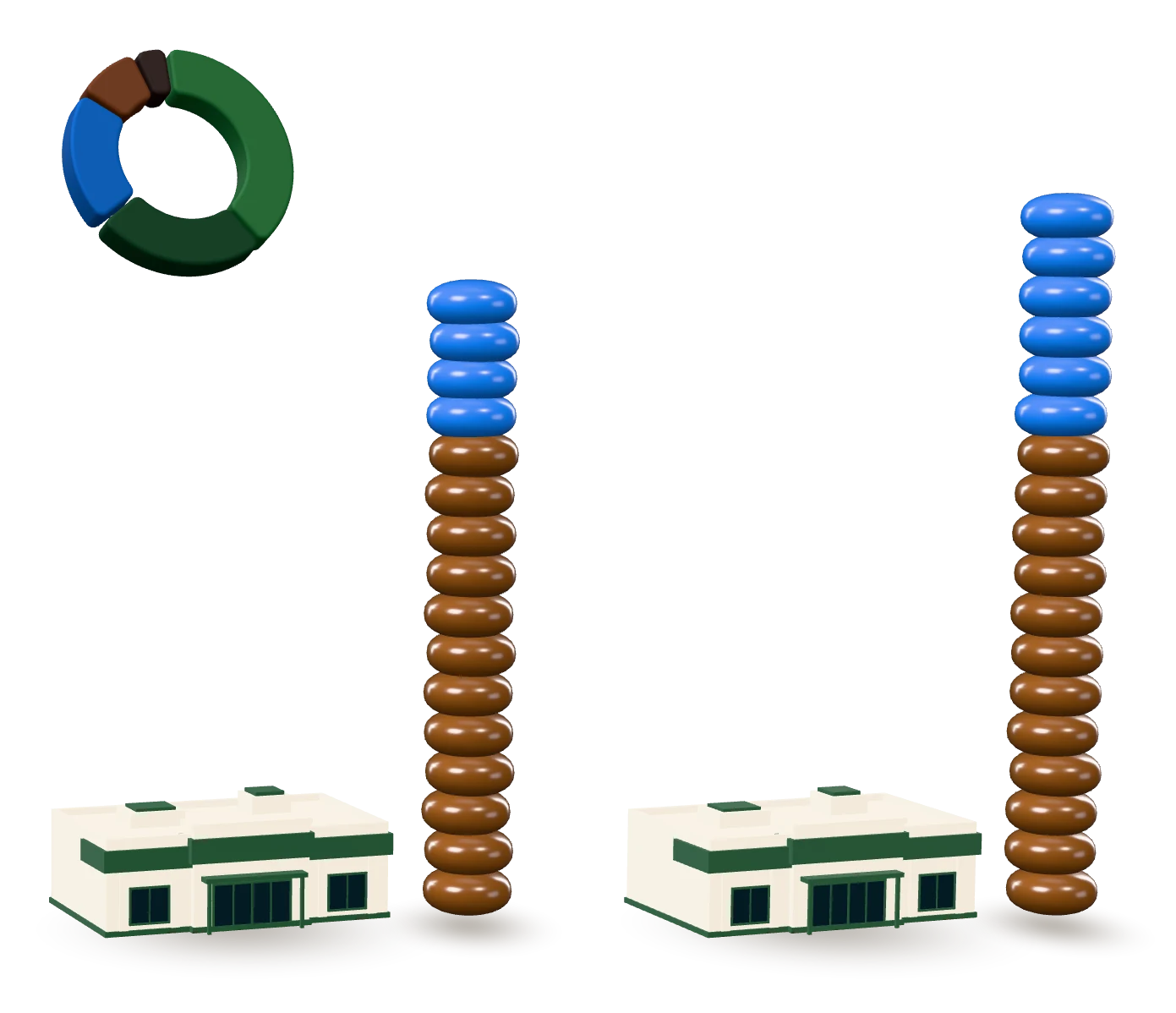
Lift, incremental units and cost per incremental unit, set against a rule written before launch. The paired bar is an example: a 56-unit week, and the 17.6 extra units a cell needs at a $3.83 CPM.
PlanWe plan for both until you confirm
About $75K a month was the first figure we heard. On 11/12 you said about $350K is planned, with a plus-up in January, and asked whether to lower it or turn it off. For December our answer is lower: about 40% of the monthly figure, moved off the email sign-up.
| Monthly budget | Impressions at a $6 CPM | People held at 2 exposures a week | Walmart trade areas held at 2 a week |
|---|---|---|---|
| $75,000 | 12.5M | 1.44M | About 60 |
| $350,000 | 58.3M | 6.74M | About 281 |
Budget ÷ CPM × 1,000 = impressions; impressions ÷ (2 × 4.33 weeks) = people. A trade area is taken as 24,000 people, which is 60% of an assumed 40,000 adults near a store (to be replaced with real ZIP populations). Walmart had 4,615 US stores on 7/31/2026. At the September CPM of $3.83 the same budgets hold about 94 and 440 trade areas.
| Line | What it is | $75K case | $350K case |
|---|---|---|---|
| Awareness | Video reach, capped. National minus hold-out markets at $350K; test markets only at $75K | 30%, $22,500 | 40%, $140,000 |
| Retail support: store weight | Extra reach on ZIP clusters around chosen stores, low-velocity cells included | 35%, $26,250 | 25%, $87,500 |
| Retail support: store intent | Locator page, optimized to the store-intent event | 20%, $15,000 | 20%, $70,000 |
| Retail support: offer test | Aisle cashback, one market, capped. Media only. The cashback has its own cap: 750 redemptions, which is $4,095 at three packs each (750 × $5.46) | 15%, $11,250 | 10%, $35,000 |
| Retail support: Walmart-measured cell | Meta bought through Walmart Connect, managed or, since April, self-serve in its Ad Center, and read on Walmart's own sales. It runs only if Walmart Connect's minimum fits a month of this line. If it does not, the money stays in store weight | none | 5%, $17,500 |
Each line is a month of media. At $350K that is a national program with proof built in: about 23M impressions a month of capped reach outside the hold-out markets, about 70 stores under heavy weight in four to six cells, and enough store-intent volume to clear Meta's 50-events threshold with room. At $75K it is one or two markets done properly. About 21 stores under weight at 2 exposures a week, drawn as ten matched pairs of small store clusters with one of each pair treated at random, so the result comes with an interval. Market-wide video reach sits behind it, with the store-intent and offer tests inside the same markets.
| Window | What happens | Spend against the monthly figure |
|---|---|---|
| 11/21 to 12/25 | Build month at a 20/80 mix. About 20% buys capped reach on store ZIP lists, outside the January test and control markets. About 80% stays in conversion tactics and moves off the email sign-up to store intent, video viewers and the Aisle pilot as each goes live. Fix the landing page and events, cut the creative, run two creative tests, the Instagram-only test and the free reads. | About 40% |
| 12/26 to 1/29 | The January flight starts in every test cell. Largest month. | About 130% |
| 1/30 to 2/26 | Flight continues through Super Bowl and Valentine's Day, both on 2/14. First look after week four. Cooldown from 2/20. | About 110% |
| 2/27 to 3/26 | Readout the week of 3/8. Winners scale into Easter (3/28). The low-velocity store test starts if it could not run inside January. | About 120%, moved by the rules |
| CPM | Cost per store per week | Extra units a week to match $10.46 a unit | Lift on a 56-unit week |
|---|---|---|---|
| $3.83 | $184 | 17.6 | +31% |
| $6.00 | $288 | 27.5 | +49% |
| $9.00 | $432 | 41.3 | +74% |
| $12.00 | $576 | 55.1 | +98% |
Holding one store's trade area at 2 exposures a week costs about $288 a week at a $6 CPM (48,000 impressions) and $184 at $3.83. A store at 8 units a day sells 56 a week. The $3.83 row is what the account paid for broad reach in September. Tight store radii can cost more, which is why the $9 and $12 rows are there; the first two weeks of delivery set the real number.
If Meta alone took a store from 8 units a day to 20 or 25, that is 84 to 119 extra units a week and $2.42 to $3.43 per extra unit at a $6 CPM. A pack sells for $1.82, so first purchases will not pay the media back inside the month on any channel. The case for Meta is the same as the case for the rest of the plan: repeat purchase, and velocity that keeps the shelf.
1 of 3The split, a month of media
$350,000 a month
$75,000 a month
One or two markets done properly, with about 21 stores under weight in ten matched pairs.
2 of 3By month
Spend is shown against the monthly figure, and the four windows average to it. January 2025 ran 24% under December on MetaR. In the build month about 20% buys capped reach around stores and about 80% stays in conversion tactics, the mix we talked through on 11/12. The split above starts 12/26.
3 of 3What a cell has to deliver
+31% to +98%R
$10.46 is what Walmart search spent per attributed unit in OctoberG. $3.83 is what broad reach cost in September. Tight store radii can cost more.
PlanLanding page and tracking
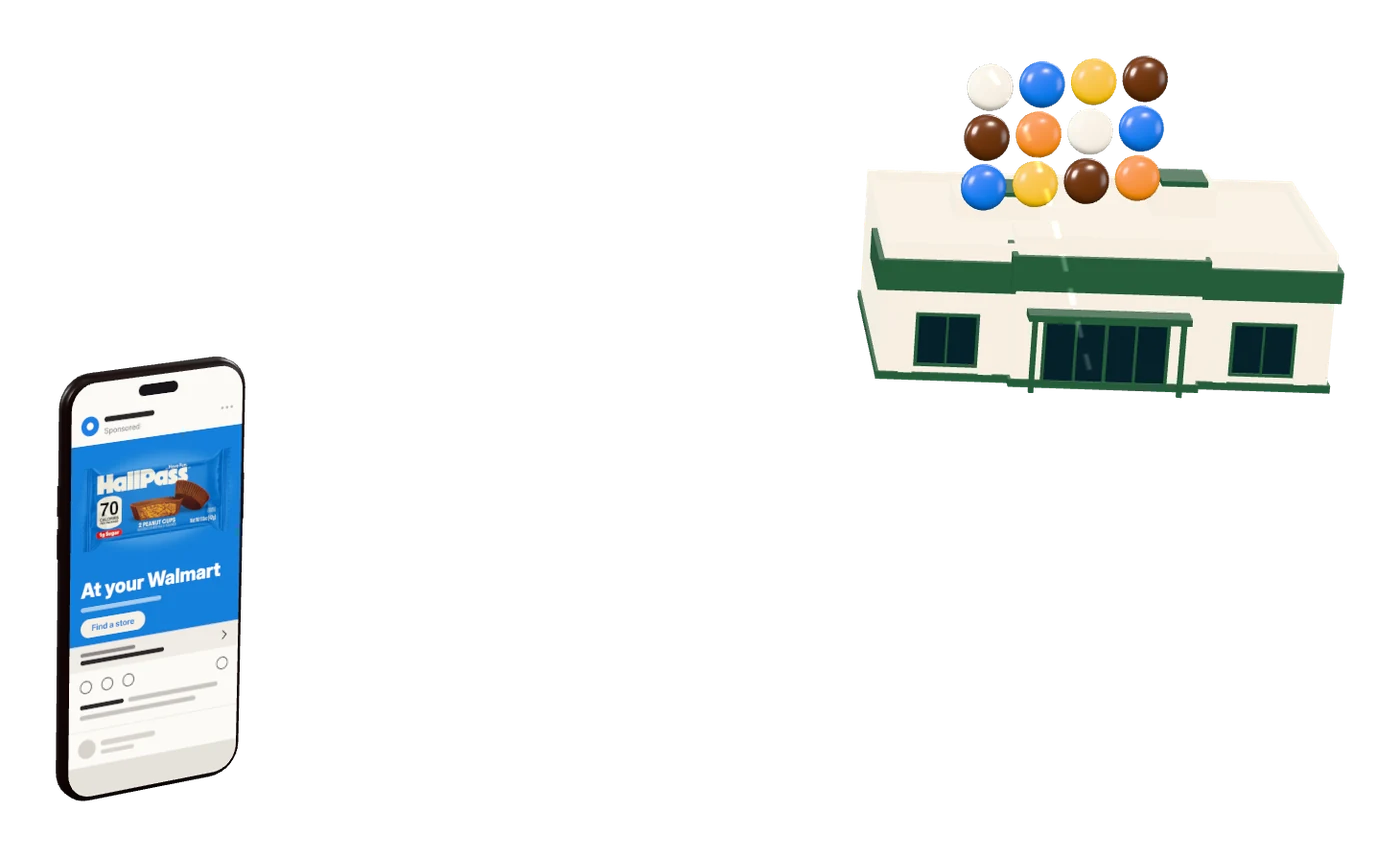
The ad and the page say the same thing, and the store-intent action becomes an event Meta can optimize to.
| Option | Signal Meta can use | Proof of a store purchase | Our call |
|---|---|---|---|
| Locator page on hallpasscandy.com, built on Pear | Locator search and Walmart click, high volume | None; intent only | Default. Already on the site, live in days, no new vendor |
| Aisle cashback page | Sign-up on the page. A redemption signal to Meta is not documented | Yes, by receipt, per shopper | Test, capped, one market |
| Meta bought through Walmart Connect | Nothing reaches the HallPass pixel | Yes in aggregate, online and in store, reported by Walmart | Test, one cell at $350K |
| Walmart product page from the brand account | Link clicks only | None | No |
| The $49.99 carton page with the email pop-up (today) | Email sign-ups | None | Stop optimizing to it |
| A third-party “where to buy” page | Retailer click | None in store | No; it repeats what Pear does |
| An Ibotta offer as the destination | None; the offer lives in an app | Inside Ibotta only | No. Use it as a line on the locator page |
Other candy brands already run both paths on Meta. A “now at Walmart” static that links to a store locator has run for 272 days, the longest-running ad in our scan (Final Boss Sour). Feastables sends both of its live ads to an Aisle page for a Target offer, and Unreal's longest runner (114 days) goes to an Aisle pageR.
Aisle proves a purchase, per person, with the store. It also counts people who would have bought anyway. Published redemption rates vary widely: one Walmart rebate campaign for a low-price food brand turned 7.5% of opt-ins into a verified purchase, and Aisle's own case studies claim 15 to 54%R.
The offer as drafted in October was three items free. Many stores carry one or two of the three, so the offer has to read “any HallPass item” or it fails at the shelfA.
FindLocation for the search, WalmartClick for the click out.CompleteRegistration firing. Stop optimizing to it unless the email list proves its worth.52,868 people gave an emailA. Before anything new is bought, Klaviyo can tell us how many of them used the locator or bought, and a single send can carry the locator link and the Ibotta offer to all of them.
If sign-ups in the North Carolina ZIPs line up with stores that sold more, the email has a value we can price. If they do not, the pop-up comes off the Meta landing path.
1 of 5The ad
“Find it at your Walmart”
Today the headline says Walmart and the page sells a $49.99 carton. From here the click lands where the ad said it would.
2 of 5The page
4 to 5%R
No pop-up on arrival. Already on the site, live in days, no new vendor. The public benchmark for US food and beverage is that 4 to 5% of media-driven visitors click through to a retailer, so we plan on that rate until the account has its own.
3 of 5The events
50 a weekR
Both go in server-side from the start, through the Conversions API feed that is already liveA. The campaign optimizes to them once the event fires about 50 times a week in the ad set, Meta's own threshold. That is the floor each ad set has to clear, not what we expect the budget to deliver. Until then it optimizes to landing page views.
4 of 5The store
Units per store per week
One page a week: spend, reach and frequency by cell; hook and hold rate by ad; locator searches and Walmart clicks with cost per action; units for test and control once the test is live.
5 of 5Two tests beside it
$5.46 against $1.03
Aisle proves a purchase by receipt. Three free packs is $5.46 in cashback per shopper, capped at 750 redemptions, and Ibotta moved units at $1.03 each in OctoberG, so the cell has to show what it adds. Meta bought through Walmart Connect reports online and in-store Walmart salesR.
PlanCreative
The hooks work. Then people leave, so the pack, the name, the calorie number and the store have to land inside the seconds they watch.
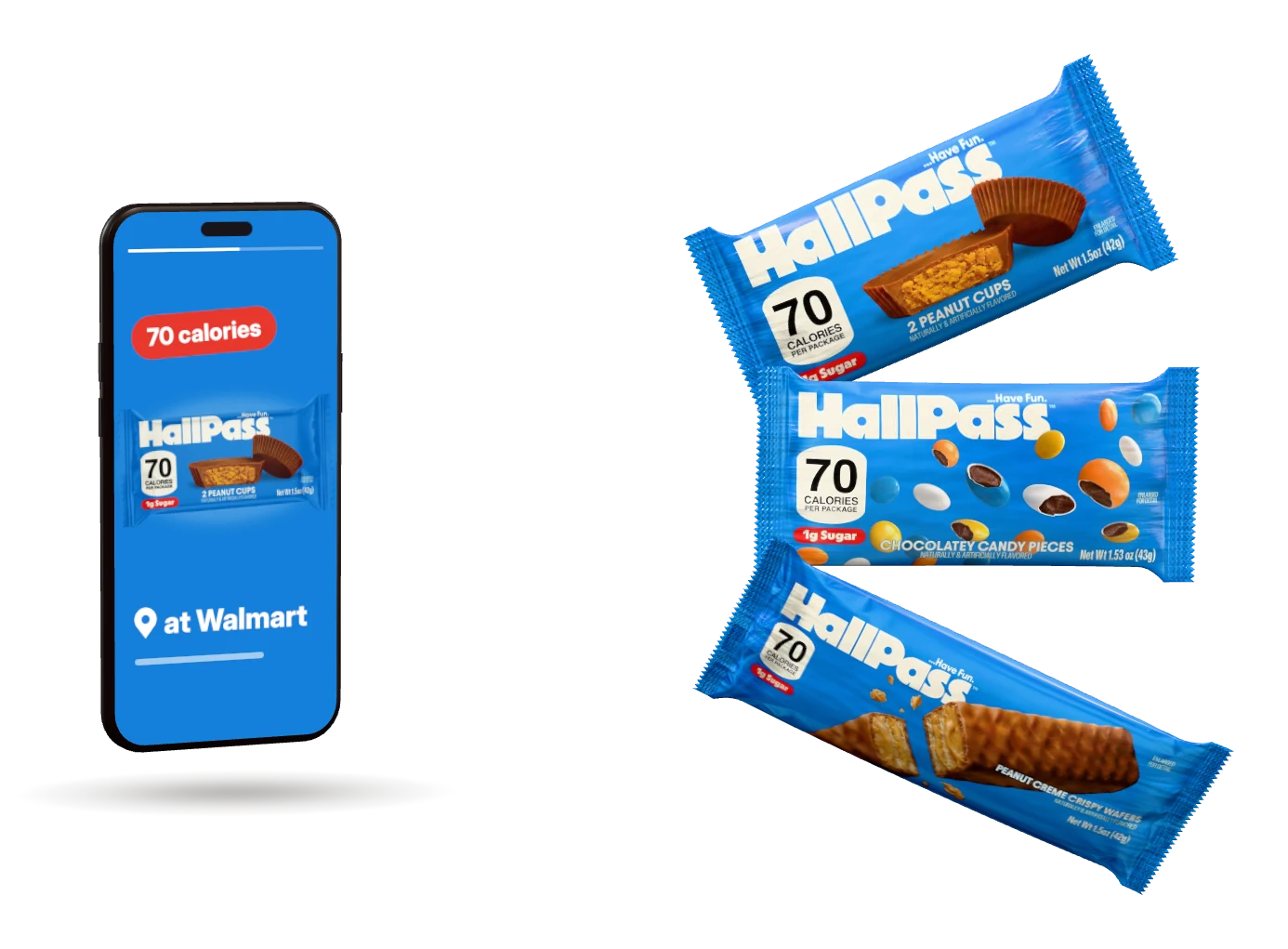
From the public Ad Library on 11/13R: the longest-running candy ads lead with a number (Shameless at 191 days, SmartSweets at 174). Almost nobody uses calories. One gummy brand says “70 calories per bag”; no chocolate or peanut butter brand leads with a calorie number, which leaves that position open to HallPass.
The competitors state their numbers per bag, and HallPass's ad text says “per serving” while its own pack says “per package”. The ads should say per pack.
| $75K a month | $350K a month | |
|---|---|---|
| Live concepts | About 6 | 12 to 16 |
| Live ads | 18 to 24 | 45 to 60 |
| New each month | 3 to 4 concepts | 8 to 10 concepts |
| Creators active | 4 to 6 | 10 to 15 |
| Mix | About half creator video run as partnership ads, the rest split between brand-made short video and statics | Same |
| Testing | Two 7-day tests a month | One 7-day test a week |
These counts sit in the low half of what outside benchmarks suggest, on purpose. The goal is recognition at the shelf, which rewards the same cues repeatedR.
| Angle | The line | Audience it fits | Format |
|---|---|---|---|
| Taste first | “Tastes bigger than 70 calories” | Everyone; the base case | Creator taste test, 10 seconds |
| The number | “70 calories a pack” (single packs; confirm the line per item) | 18 to 44, label readers | Static with the pack and the number |
| The swap | The classic cup or wafer beside HallPass, numbers stated | Candy aisle regulars | Side by side, static and 6 seconds |
| Diet soda | “You switched your soda. Now your candy.” | Diet soda and low-sugar shoppers, the best Walmart display audiencesG | Static and 10 seconds |
| At your Walmart | “$1.82 at Walmart. Candy aisle.” with the town name | Store-weight cells | Static; shelf shot video |
| January | “Keep the candy.” | New-year window, no diet language | 6 and 15 seconds |
A clean test of the GLP-1 angle waits for January and for counsel. It barely delivered in OctoberA.
1 of 3What the account shows
43.9%A pass three seconds
38.8% of those reach a ThruPlay. Only 22.3% of impressions reach a quarter of a video and 4.5% finish, on videos that run 30 to 66 seconds. Average watch time is 3 to 13 seconds.
2 of 3The rule
By second three
Keep the openings that already stop people. Cuts of 6, 10 and 15 seconds, nothing over 30, and nothing the viewer needs comes after second ten.
3 of 3Angles to test first
Plan11/23 to the week of 3/8
December is for fixing the landing page, the event and the creative. January is the flight.
Week of 11/23Walkthrough
Budget confirmed. Store data request sent. Access to Events Manager and Business Manager.
HallPass, Good Peeps
11/23 to 12/4T1, the free reads
Read North Carolina and Texas against store sales. One page, labelled directional.
Good Peeps
11/23 to 12/11Plumbing
Pear events into Meta, the two custom conversions, the locator landing page, UTMs with cell codes, the weekly sheet. Open the Walmart Connect social tab and record its minimums and reporting.
Good Peeps with HallPass and Pear
11/30 to 12/11Test design
Unit, power check on real data, random assignment, the written plan.
Good Peeps
12/1 to 12/18Creative
Short cuts, statics back, first two creative tests, the Instagram-only split test, January angles briefed to the agency and creators.
Good Peeps with HallPass's creative partners
12/14 to 12/25Hold steady
No geo changes in any channel. Campaigns built and checked.
Both
12/26The January flight starts
Week one is ramp.
Good Peeps
1/22First look
Delivery, creative, store-intent costs. No read of the primary metric yet.
Good Peeps
2/19Flight ends
Two weeks of cooldown.
Good Peeps
Week of 3/8Readout
Lift, incremental units, cost per incremental unit, against the written rule. Scale, hold or cut.
Good Peeps

NextTen open items
Each open item has an owner and a date. The build month starts the week of 11/23.